


Suppose you are launching Red, an energy drink for coders still working at 4 am. You create 10k synthetic customers and ask what they think. They prefer a matte black can, approve of the caffeine level and say they would pay €4.50. The research deck looks excellent.
There’s only one problem. None of them has to drink it, pay for it or choose it over coffee when 4 am actually arrives. You have learned what a model predicts a tired coder might say. You have not learned whether a market exists.

Synthetic data is not nonsense.
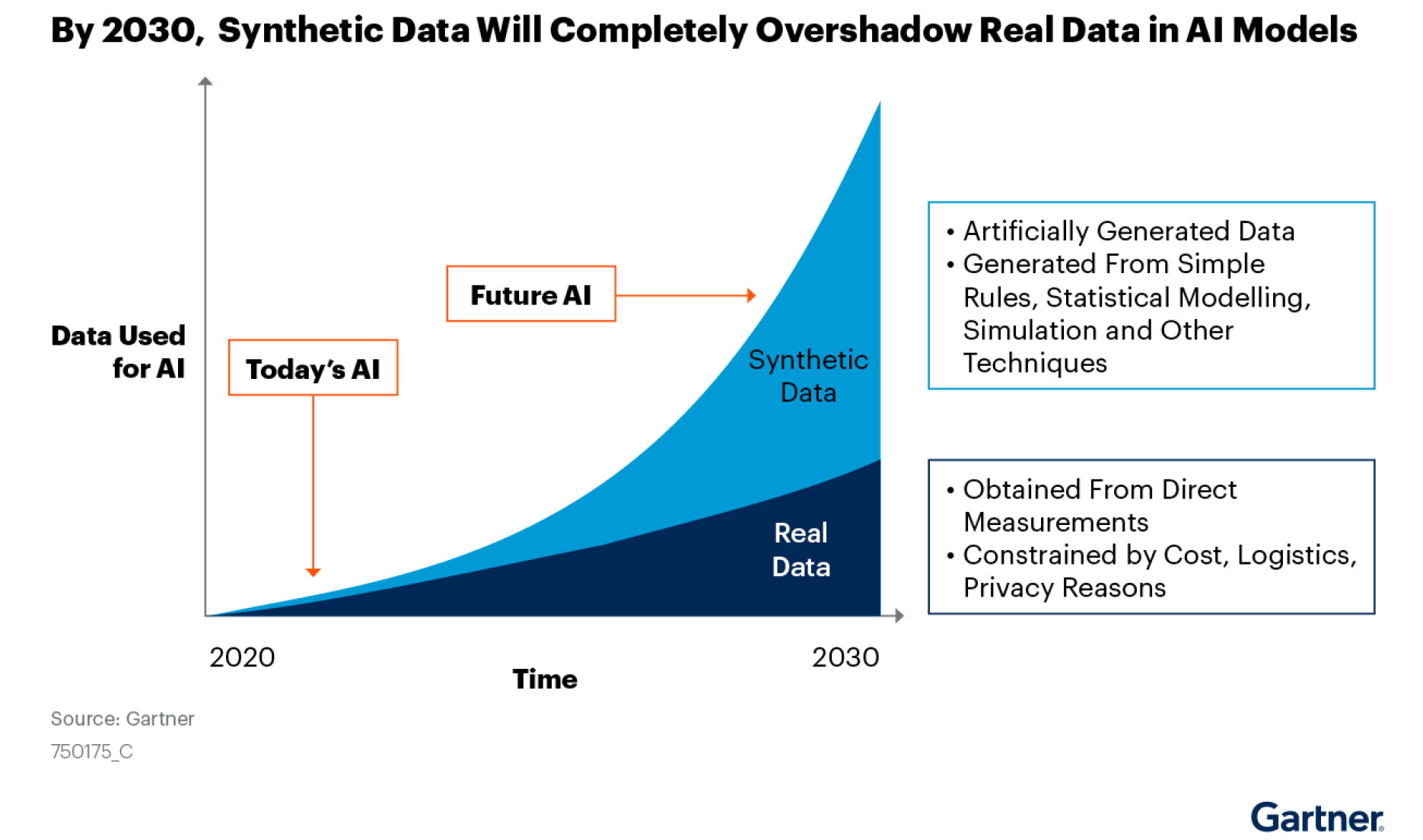
It is artificially generated data created through rules, simulations or models trained to reproduce patterns in existing data. Used well, it lets developers test software without handing real customer records to every engineer. It can create rare test cases, add examples where real data is scarce and simulate driving conditions that would be slow, dangerous or impossible to collect at sufficient scale. That is useful because the question is clear. Will the system behave as expected?
The trouble starts when a useful technical method becomes a substitute for customer research.
The original promise was seductive. Faster research and lower cost. Thousands of customer profiles without recruiting a single customer. It sounded like eating your cake and losing weight.
The privacy claim needs more care. Synthetic data can reduce exposure to personal information, but it is not automatically anonymous or legally uncomplicated.
Every synthetic dataset also has a parent. If the source data underrepresents a customer group, misses an unusual behaviour or contains an old bias, the generated data can reproduce the gap with impressive efficiency. You can tell the model to fill what is missing, but that adds an assumption. It doesn’t create an observation.
This becomes more dangerous when synthetic records turn into synthetic people. You can ask it to behave like a 43 year old procurement director at a large company. It will produce a convincing answer. What it does not have is a budget, a boss, a previous vendor failure, an implementation team or a career that could be damaged by choosing you. You could possibly build this into the model but it’s not straightforward.
That missing context is the decision.
Recent research into language models as synthetic survey respondents shows why caution matters. One 2026 study found that adding demographic personas did not consistently improve agreement with human responses and sometimes made results worse for particular questions and smaller population groups. The answers looked like data, but their errors depended on the model, prompt and group being simulated.
Real customers are valuable because they refuse to behave neatly. They misunderstand your clear positioning. They say price matters, then choose the expensive option. They build a strange workaround nobody inside the company anticipated. They ignore the feature everyone loved in the planning meeting and become obsessed with something added on a Friday afternoon.
That is the market refusing to cooperate with your assumptions.
Synthetic customers can still help. Use them to generate hypotheses, test interview questions, explore possible objections or expose gaps in a research plan. Use synthetic datasets to create safer development environments, pressure test systems and improve coverage of rare cases. Then validate the result against real people and real behaviour.
The closer a decision gets to pricing, positioning, product direction or demand, the less authority a simulated answer should have. Customer interviews are imperfect. Surveys are imperfect. Paid pilots, deposits, usage and renewals are imperfect too. At least they involve someone giving up time, money or reputation.
See you out there.
Martin