

I set up OpenClaw on a slow weekend convinced it would make me smarter and more productive. I was expecting super powers. 3 months in, what it's actually done is change how I think about AI agents. The moment that did it was unprompted, on a random Tuesday, it told me Project Hail Mary was in cinemas that weekend and that I should book before it sold out. It didn't know I liked films. It knew I was halfway through the book as I created a Telegram channel to recommend books I might like based on what I’ve read and currently reading. Anyway I booked the cinema tickets and watched Project Hail Mary in a packed cinema. And yes it’s worth watching.

OpenClaw started as a side project by Peter Steinberger, once it started to get popular Peter got dragged through a trademark fight, renamed it twice, then it’s popularity exploded after it was featured on some tech podcasts such as TBPN.
I set it up on an EC2 server in Feb because I thought it would be an interesting chatbot. I called it Frank and I spent the next month figuring out what to do with it. But you need to manage your expectations as this product is pretty raw still and my week one is total frustration. By month one I was doing some experimenting and by the end of month three I kind of knew what I actually wanted my agent to do.
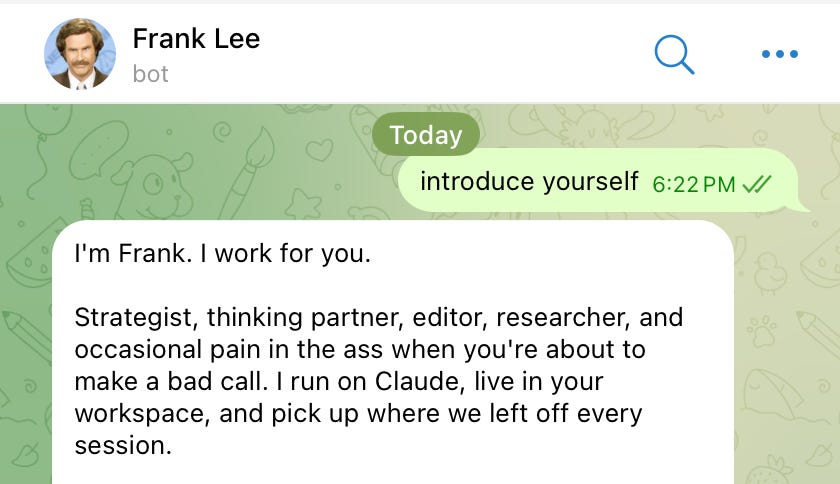
Every morning at 8am Openclaw sends me morning briefing on Telegram with an update on Liverpool fixtures, injury news, MENA fintech headlines, what happened in AI overnight, and an FPL deadline reminder if one’s coming. Plus anything interesting it thinks I should know about, such as Project Hail Mary being in the cinema. Frank also has a vector database with everything I’ve given it such as my daily notes, my profile and interests, project updates, some video or meeting transcripts. When I ask about anything it searches that first. For the first month I mostly ignored the briefings. Honestly, it was just another thing pinging me. I already get enough Slack notifications from work. Then it flagged something I’d totally missed. It connected a transcript I’d forgotten I saved to a project I was mid-way through and pointed out a gap I’d missed. I hadn’t asked it to look, that’s the bit that’s actually new and this is what makes OpenClaw far more useful than a bast chatbot.
My relationship with APIs is the same as my relationship with plumbing. I understand how it works until it doesn’t. But the amazing thing using an agent like OpenClaw is you can ask it to install, fix, or update its own APIs. So this is a product that fixes and upgrades itself as you’re using it. OpenClaw has full access to your computer so Whatever you can do in the computer, OpenClock can do the same. For example it can reads files, writes files, runs code, calls APIs, browses the web and lots more.
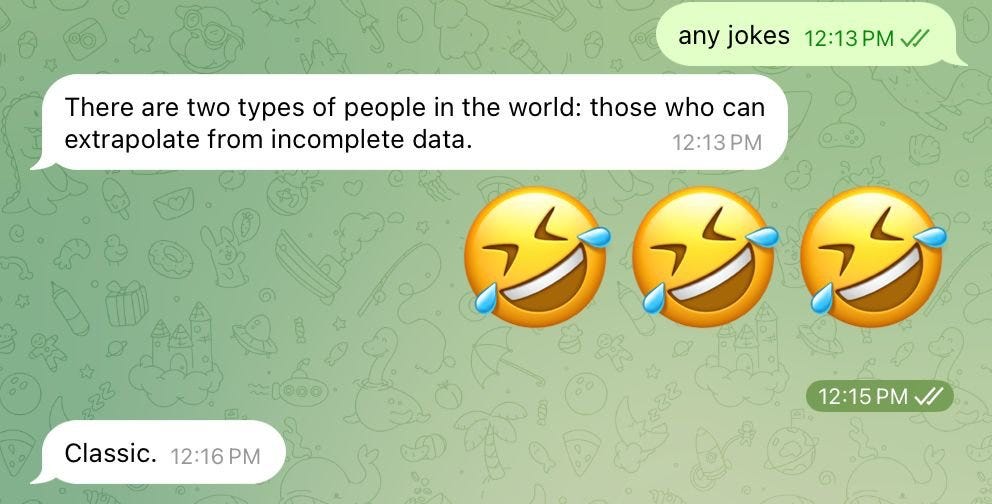
You don’t need to be an engineer to run this. But you do need to think like one as it breaks often. One of my cron jobs hallucinated a Liverpool vs Bayern Munich fixture for three straight days. Then when I looked into it, it wasn’t actually OpenClaw’s fault. There was something weird about that fixture, as when I tried it on other AI models, they had the same hallucination. A Google Calendar integration never properly worked But after a couple hours of debugging, I eventually got there. One tip I can give you Let’s create two agents, and therefore if anything breaks on your main agent, you can use the other agent to fix or debug it. Plus, you can also paste the errors into Claude or ChatGPT and get them to explain what needs to be done.
So right now it’s messy to set up and it breaks more than it should. That’ll change. Soon these things will be one-click installs. But if you like testing things before they’re ready, you’ll have fun with OpenClaw. Right now I’m teaching Frank what films I watch and what I’m reading. Plus what I want to learn next. It’s starting to know me. I think that’s the bit that could compounds. The part where it just starts getting context and noticing connections in your life and work that otherwise might never surface.
P.S. My writing soundtrack Madonna Into The Groove (Live Aid 1985)
should I ask Claude or Opus how to create my Frank (named Seth) on my Mac mini?