


I love this idea from Patrick Collison, who cofounded Stripe.
He posted on X that personal AI agents will act as “a kind of structural subsidy for product quality”, for example if everyone’s agent does 10 or 100 hours of Sherlock Holmes like research before every purchase, the better product should win more often and therefore distribution matters less... as long as the agent is on your side.
But I’m a marketer so of course my first thought was, what if a competitor’s product is better, can marketing still get your product chosen when an agent starts researching and comparing product options?
I had an agent compare 20 or 30 executive coaching courses. It recommended the cheapest one, but it was still using a preference it had saved from an earlier search, when I didn’t want tutor time. This time I did, so I picked a more expensive course. In my course search, the agent could find the right information but it was adding a preference that was no longer valid for what I was looking for. So the agent was acting on my behalf except it was based on my needs from 6 months ago.
I also read this Wharton fitness watch shopping experiment where researchers planted one sentence about the customer “I love hiking!” and most models skewed towards a hiking watch, even though another watch option was much cheaper and had a higher rating. Ok that could be useful personalisation, but only if the preference is accurate and relevant to this purchase... like my coaching course, it wasn’t.
It’s tempting to picture a shopping agent as Spock with a credit card, too logical to fall for a sales pitch. But a separate study led by MIT researchers found AI agents fall for the same price, rating and sales tactics that sway people, even though they lack the human limits behind those biases. Handing decisions to an agent keeps our biases and may even scale them up. For example the researchers changed what agents saw on the product, adding “best seller” or an expert recommendation, could change which product the agent recommended. It varied by model, but that’s the opportunity for marketers as the researchers didn’t improved the products, they’d just changed how they were presented to the agent.
Even if an agent studies every spec, reads the privacy policy we all skip, it still has to decide what information actually matters. Therefore how you present your product can influence which benefits it notices and how convincing it finds the evidence. This means a brand can increase its chances of success.
But consumers are not giving up full control.
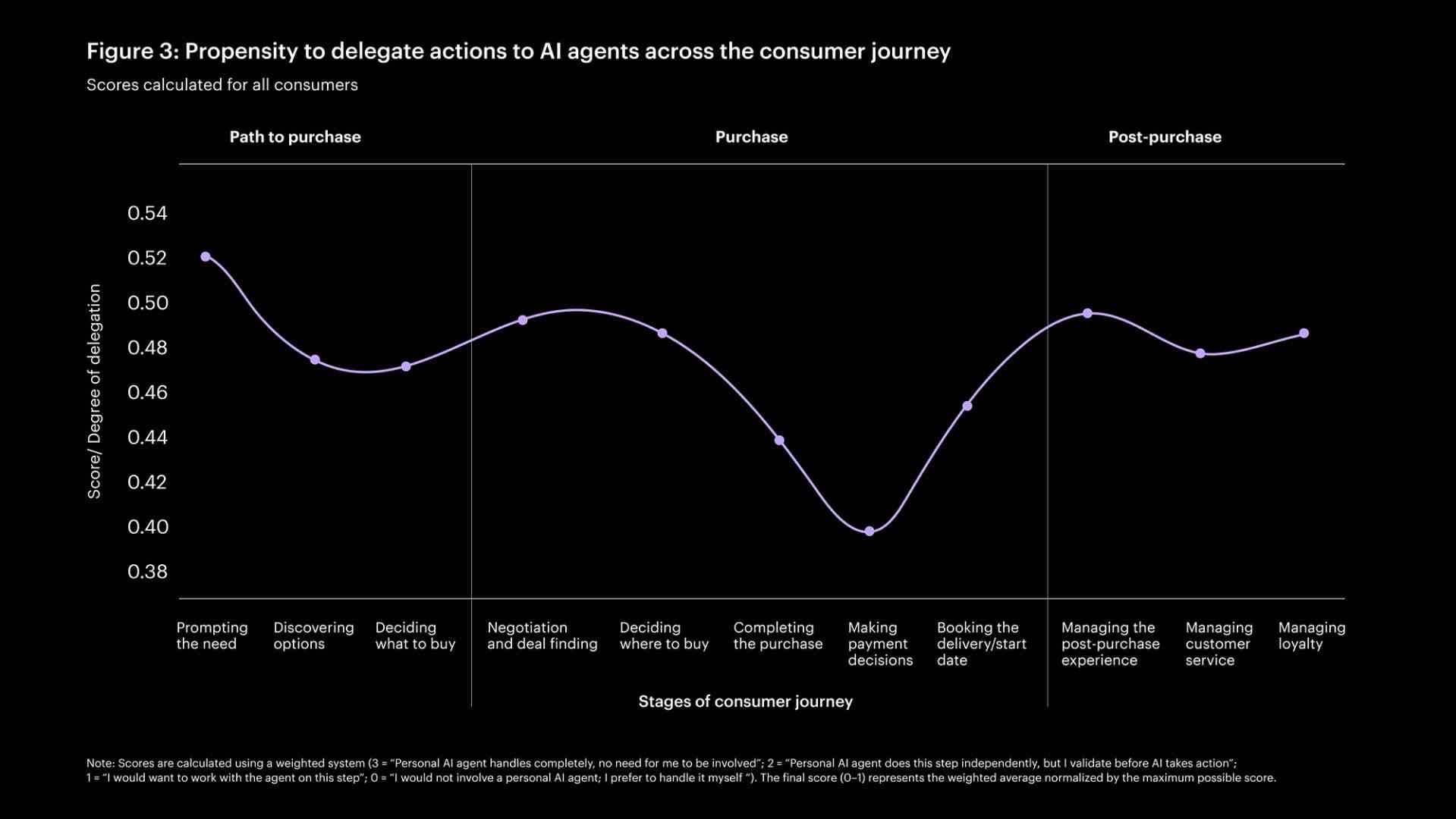
In an Accenture survey, 56% of consumers said they’d tell their agent which brands to consider. This means brand preferences still influence the agent’s search. For example I always tend to lean towards marketing software I’ve worked with before, like Salesforce or HubSpot. Yes the agent often finds better products whenever we do a market scan. That doesn’t mean I’ll switch or buy it because if an unknown product fails in a critical part of the business, I’m still the one who gets smashed.
Wharton’s tests showed what agents read before comparing products could change which one they chose. For example one model was given a Wirecutter recommendation and this led it to picking that product in nearly every run, while other models responded with different results. The researchers hadn’t changed the product quality, they’d changed the agent’s context. That’s why I wouldn’t write marketing off just yet. If an influential product reviewer tests your product and actually gets what’s good about it, that still sways the purchase even when the buyer never reads the review, because their agent might.
There’s also the question of what the agent can actually access. In September, Amazon blocked Meta’s Muse from shopping on its site, stating security concerns. An agent might still learn about those products elsewhere, but knowing an option exists is different from checking the offer or completing the purchase. 1000 hours of AI research doesn’t guarantee that every option gets considered.
We’ve kind of been here before with Google. It was meant to rank the best websites, but businesses figured out how to improve the rankings without changing what they sold... sometimes by making their product information clearer, sometimes by gaming the signals. Ok a shopping agent does a lot more than a search engine, but I don’t think being able to compare products makes the fight to be found and understood go away.
I previously wrote that marketing was splitting into two jobs, persuading people and making the company understandable to machines. I don’t think the two jobs are as separate as I first thought. The agent still judges products based on what it thinks the customer wants. When mine compared coaching courses, it used a preference from an earlier search, when I hadn’t needed time with a tutor. This time I did. It could read the course details, but it was judging them by what I’d wanted before. For product marketing, making the facts understandable to a machine is only part of the job. You also need to make clear who a benefit matters to and why it should influence their choice.
Patrick Collison may be right that agents help better products win. But agents can carry biases from their training, and their instructions can contain assumptions that don’t fit the purchase... mine did.
So yes, I think better product marketing can still beat a better product.
A lot of people are making the case that shopping agents are going to be ultra-rational, and that we humans, as we know are emotional, we have biases and we can be manipulated. But agents are programmed by emotional humans and may have biases built in. Some might call product marketing manipulation, but really it’s about convincingly communicating the value of your product to your customer in a way that understands their needs and wants. Even if you have the best product, if you don’t communicate that, an agent isn’t going to magically bring your invisible product to the table.
And yes agents may get better at ignoring misleading claims. But even then, they still need evidence of why your product is the right choice for your customer.
Has a buyer ever told you they found you through ChatGPT, Claude or any other AI model? Hit reply and tell me how it happened, I read every one and the best stories might end up in a future issue.
P.S.
This month’s soundtrack is “Dying In Reverse” by Cage The Elephant.